The next big leap is almost here
Join Cohesity for a major reveal—and see what’s possible.


November 2026 Newsletter:
Anti-Analysis Tactics & Data Theft Unmasked
Cohesity REDLab is the data protection industry’s only dedicated source of actionable intelligence on how malware interacts with backup infrastructure. This team of experts operates an air-gapped facility where live malware is executed against production-grade Cohesity DataProtect and Cohesity NetBackup deployments. By analyzing sophisticated malware, researchers gain deeper insight into emerging techniques and tactics. These findings help drive the design and enhancement of advanced threat detection and scanning technologies, strengthening defences against ransomware attacks.
This newsletter provides monthly updates on the most impactful ransomware strains evaluated in REDLab, along with comprehensive findings concerning detection and recovery procedures.
Cohesity DataProtect and NetBackup in REDLab
REDLab incorporates both Cohesity DataProtect and Cohesity NetBackup to conduct extensive testing against malware and sophisticated cyberattacks. Through live malware execution, real-world exploit detonation, and modern attack techniques, REDLab evaluates the performance of Cohesity solutions under authentic attack conditions. Its air-gapped environment enables comprehensive threat assessment in a controlled setting. REDLab testing is guided by the following principles:
- Live, Current Threats: Every strain detonated in REDLab is active malware sourced from real-world circulation - not synthetic samples or theoretical attack models - ensuring results reflect the threats security teams face today.
- Production-Grade Conditions: Tests are conducted on fully configured DataProtect and NetBackup deployments within an air-gapped facility designed to mirror real customer environments, rather than simplified lab setups.
- Continuously Expanding Scope: REDLab’s threat library is updated monthly with newly identified ransomware families and attack techniques, ensuring testing evolves alongside the threat landscape.
REDLab Findings
During this month, the malware strains listed below were intentionally detonated to evaluate product efficacy of Cohesity DataProtect and NetBackup.
|
Strain Details |
SHA-256 Hash |
|---|---|
|
Name: Akira |
67afa125bf8812cd943abed2ed56ed6e07853600ad609b40bdf9ad4141e612b4 |
|
Name: Qilin |
37546b811e369547c8bd631fa4399730d3bdaff635e744d83632b74f44f56cf6 |
|
Name: Majinahanashi |
98565754be5c8c6bf8e6bfd9c27405849dd055ac3b35e0a7076be4a649fc8bf1 |
|
Name: Black Basta |
5d2204f3a20e163120f52a2e3595db19890050b2faa96c6cba6b094b0a52b0aa |
Akira Ransomware
|
Technique Name |
MITRE ATT&CK ID |
Tactic(s) |
|---|---|---|
|
Data Encrypted for Impact |
T1486 |
Impact |
|
Service Stop |
T1489 |
Impact |
|
Obfuscated Files or Information |
T1027 |
Defense Evasion |
|
Software Packing |
T1027.002 |
Defense Evasion |
|
Impair Defenses |
T1562 |
Defense Evasion |
|
Disable or Modify Tools |
T1562.001 |
Defense Evasion |
|
Create or Modify System Process |
T1543 |
Persistence, Privilege Escalation |
|
Windows Service |
T1543.003 |
Persistence, Privilege Escalation |
|
OS Credential Dumping |
T1003 |
Credential Access |
|
Unsecured Credentials |
T1552 |
Credential Access |
|
Credentials In Files |
T1552.001 |
Credential Access |
|
Credentials from Password Stores |
T1555 |
Credential Access |
|
Credentials from Web Browsers |
T1555.003 |
Credential Access |
|
Replication Through Removable Media |
T1091 |
Initial Access, Lateral Movement |
|
Application Layer Protocol |
T1071 |
Command and Control |
|
Data from Local System |
T1005 |
Collection |
|
System Owner/User Discovery |
T1033 |
Discovery |
|
System Information Discovery |
T1082 |
Discovery |
|
File and Directory Discovery |
T1083 |
Discovery |
Note: Above table contains a curated subset of techniques prioritized for monitoring and response.
Malware impact post execution
Akira was selected for this month's report as one of the most active ransomware operations in the current landscape. Open-source tracking attributes roughly 1,500 leak-site victims to the group since it emerged in 2023, including a record 84 disclosures in March 2026 alone, and ranks it second only to Qilin by volume for the first quarter of 2026. The ransom note recovered in this detonation explicitly asserts that backups were destroyed before encryption, making Akira a direct test of recovery resilience.
Akira is a 64-bit Windows PE console payload (approximately 570 KB). A static YARA match confirmed the Akira family, and the binary is packed, carrying an unknown PE section name.
Before encrypting, the sample performs light environmental checks. It queries the keyboard layout and system locale, checks its process token for administrator or Windows User Account Control (UAC) elevation status, queries the FIPS cryptography policy and installs a SetUnhandledExceptionFilter anti-debug hook. A date-expiration style check was also observed, in which the process exits shortly after reading the local time.
Encryption is fast and highly parallel. The strain systematically walks user directories with wildcards, binds a large number of files to I/O Completion Ports for asynchronous encryption and overwrites existing files. Every affected file is renamed with an “.iqoj” extension, and a single ransom note filename, “readme-asldkas”, is copied across multiple directories.
The sample also attempts to stop active services, a pattern commonly used to release file locks held by databases and backup agents, and creates an autorun.inf file to propagate through removable media. REDLab analysis recorded theft of private information from local browsers and HTTP requests carrying features characteristic of malware traffic, including a request to a commonly exploitable directory path. The ransom note claims that corporate data was exfiltrated and backups removed, offers a test decryption, threatens publication on the group’s blog and directs the victim to a Tor-based chat portal using a victim-specific access code, confirming a double-extortion posture.
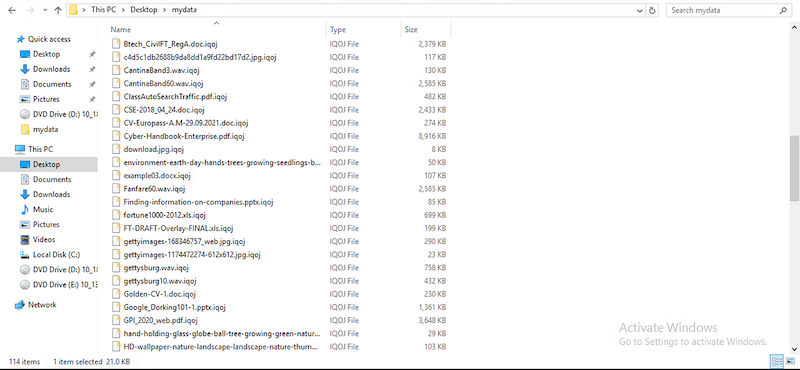
Figure 1: Victim files following detonation, each appended with the “.iqoj” extension.
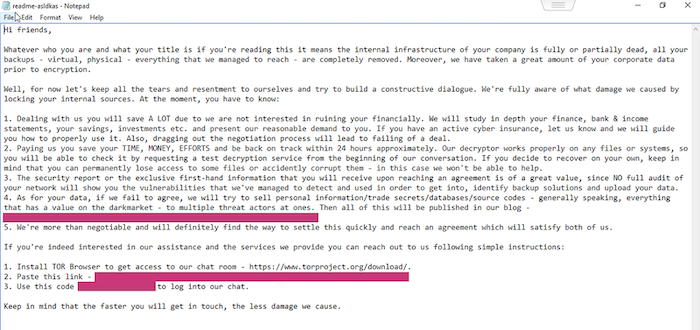
Figure 2: The “readme-asldkas” ransom note claiming data theft and backup destruction, with the Tor portal details redacted.
Protection & Detection Outcomes
Both DataProtect and NetBackup performed successful VMware backup and recovery following the attack. DataProtect VMware backup operations remained unaffected throughout. NetBackup's Image Entropy anomaly detection actively identified unusual deviation in VMware backup job attributes demonstrating its threat detection capabilities working as designed. VMware based backup and recovery was successful for both products.
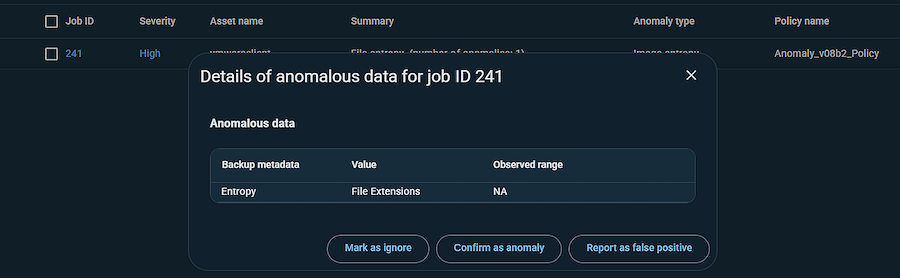
Figure 3: Akira NetBackup Entropy Anomaly Result.
Threat Hunting Results
Following the ransomware attack, Rapid Threat Hunt was leveraged to proactively search for malicious activity using known SHA-256 hash and IOC associated with the Akira ransomware. The hunt successfully identified impacted clusters, objects, and file artifacts within the environment, providing clear visibility into the scope of compromise.
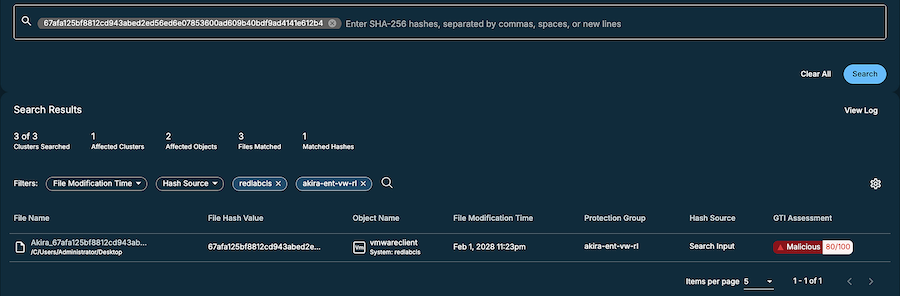
Figure 4: Akira Rapid Threat Hunt Result.
Qilin Ransomware
|
Technique Name |
MITRE ATT&CK ID |
Tactic(s) |
|---|---|---|
|
Service Stop |
T1489 |
Impact |
|
Inhibit System Recovery |
T1490 |
Impact |
|
Obfuscated Files or Information |
T1027 |
Defense Evasion |
|
Process Injection |
T1055 |
Defense Evasion, Privilege Escalation |
|
Indicator Removal |
T1070 |
Defense Evasion |
|
Virtualization/Sandbox Evasion |
T1497 |
Defense Evasion, Discovery |
|
Impair Defenses |
T1562 |
Defense Evasion |
|
Hijack Execution Flow |
T1574 |
Defense Evasion, Execution |
|
Create or Modify System Process |
T1543 |
Persistence, Privilege Escalation |
|
Command and Scripting Interpreter |
T1059 |
Execution |
|
Native API |
T1106 |
Execution |
|
Shared Modules |
T1129 |
Execution |
|
System Services |
T1569 |
Execution |
|
Input Capture |
T1056 |
Collection, Credential Access |
|
Application Layer Protocol |
T1071 |
Command and Control |
|
Proxy |
T1090 |
Command and Control |
|
Archive Collected Data |
T1560 |
Collection |
|
System Information Discovery |
T1082 |
Discovery |
|
File and Directory Discovery |
T1083 |
Discovery |
|
Network Share Discovery |
T1135 |
Discovery |
|
Software Discovery |
T1518 |
Discovery |
Note: Above table contains a curated subset of techniques prioritized for monitoring and response.
Malware impact post execution
According to our research, Qilin was the most active ransomware group of 2026 to date. Open-source tracking shows about 100 leak-site listings per month on average. The group hit a record of at least 165 incidents in August 2026. It has been the leading ransomware operation since the second quarter of 2025. Its affiliate model has also reportedly seeded newer brands, including The Gentlemen, which was evaluated in last month's edition.
Qilin (also tracked as Agenda) is a 32-bit Windows PE console payload (approximately 1.6 MB) that requires an operator-supplied “-password” argument to run. Static analysis matched multiple YARA rules and showed a thread-local-storage section, a registered vectored exception handler and a SetUnhandledExceptionFilter hook, consistent with anti-analysis and execution-flow hijacking.
When launched with the password argument, the sample prints a 45-second pre-encryption notification and then turns to service manipulation. It attempted to stop or disable BrokerInfrastructure, ClipSVC, gpsvc, NgcCtnrSvc, RmSvc, SamSs, tiledatamodelsvc, TimeBrokerSvc, VSS, WinDefend and wudfsvc. Several calls failed with access-denied errors, but the Volume Shadow Copy service and several others were stopped and disabled, and an explicit attempt to remove shadow copies failed with a non-zero exit code.
Encryption runs in global traversal mode across local and attached volumes. In this detonation the sample encrypted 5,457 files in roughly 31 seconds, appending a randomly generated ten-character extension (“.gBBQsRxAcQ”) and writing a “README-RECOVER” ransom note named with the same identifier into each directory; repeated “file exists” errors confirm the note was already present in many folders. Files that could not be opened were skipped with “can’t open file” warnings.
The ransom note claims that sensitive data was downloaded, listing employee personal data, a complete network map with credentials, financial records and manufacturing schematics. It warns that modifying files or using third-party recovery tools will prevent decryption, states that police or authorities cannot help recover the key and directs the victim to a Tor-hosted portal using victim-specific credentials, confirming a double-extortion posture.
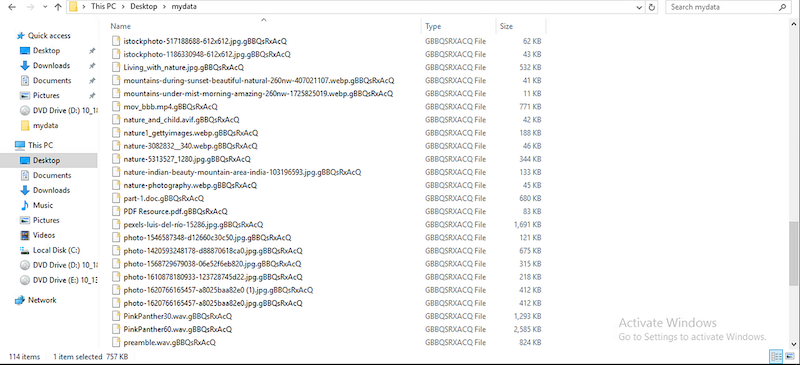
Figure 5: Victim files following detonation, each appended with the “.gBBQsRxAcQ” extension.
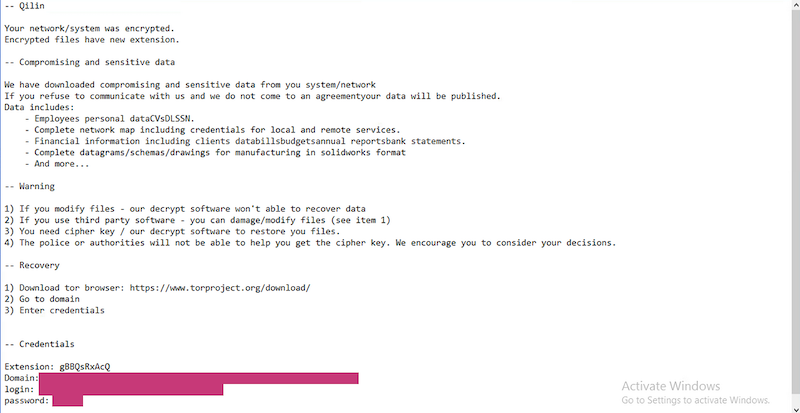
Figure 6: The “README-RECOVER” ransom note claiming data theft and listing the stolen data categories, with the Tor portal credentials redacted.
Protection & Detection Outcomes
Both DataProtect and NetBackup performed successful VMware backup and recovery following the attack. DataProtect VMware backup operations remained unaffected throughout. NetBackup's Image Entropy anomaly detection actively identified unusual deviation in VMware backup job attributes demonstrating its threat detection capabilities working as designed. VMware based backup and recovery was successful for both products.
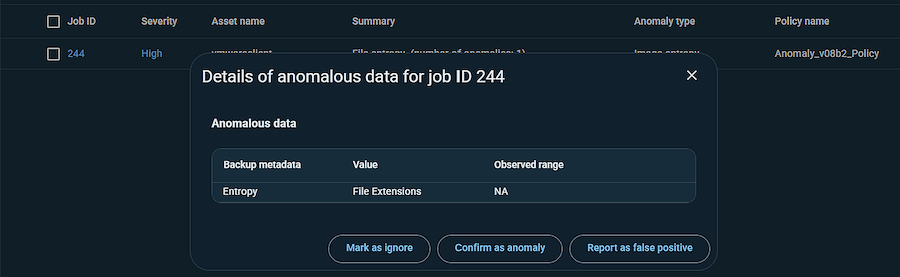
Figure 7: Qilin NetBackup Entropy Anomaly Result.
Threat Hunting Results
Following the ransomware attack, Rapid Threat Hunt was leveraged to proactively search for malicious activity using known SHA-256 hash and IOC associated with the Qilin ransomware. The hunt successfully identified impacted clusters, objects, and file artifacts within the environment, providing clear visibility into the scope of compromise.
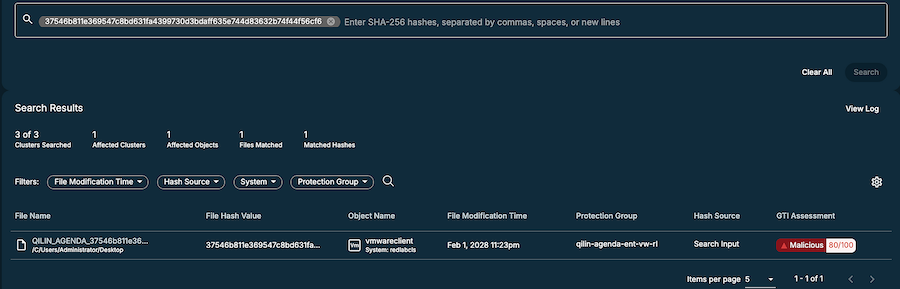
Figure 8: Qilin Rapid Threat Hunt Result.
Majinahanashi Ransomware
|
Technique Name |
MITRE ATT&CK ID |
Tactic(s) |
|---|---|---|
|
Data Destruction |
T1485 |
Impact |
|
Data Encrypted for Impact |
T1486 |
Impact |
|
Service Stop |
T1489 |
Impact |
|
Inhibit System Recovery |
T1490 |
Impact |
|
Indicator Removal |
T1070 |
Defense Evasion |
|
Indirect Command Execution |
T1202 |
Defense Evasion |
|
Bootkit |
T1542.003 |
Defense Evasion, Persistence |
|
Impair Defenses |
T1562 |
Defense Evasion |
|
Disable or Modify Tools |
T1562.001 |
Defense Evasion |
|
Hide Artifacts |
T1564 |
Defense Evasion |
|
Hidden Window |
T1564.003 |
Defense Evasion |
|
Create or Modify System Process |
T1543 |
Persistence, Privilege Escalation |
|
Windows Service |
T1543.003 |
Persistence, Privilege Escalation |
|
Command and Scripting Interpreter |
T1059 |
Execution |
|
Application Layer Protocol |
T1071 |
Command and Control |
|
System Owner/User Discovery |
T1033 |
Discovery |
|
Process Discovery |
T1057 |
Discovery |
|
System Information Discovery |
T1082 |
Discovery |
Note: Above table contains a curated subset of techniques prioritized for monitoring and response.
Malware impact post execution
Majinahanashi was selected as an emerging double-extortion group first observed in mid-2026. Open-source reporting dates its first activity to between July and August 2026. It credits the group with roughly 40 claimed victims so far. Counts vary by tracker. The victims include hospitality, e-commerce, manufacturing, construction, and engineering firms located in the United Kingdom, Europe, Malaysia, and the United States.
The group reportedly rebranded its leak site on October 2, 2026, indicating active and continuing development.
Majinahanashi is a compact 64-bit Windows PE payload (GUI subsystem, approximately 90 KB). Despite its small size, the payload carries an extensive pre-encryption routine.
Before encrypting, the sample profiles the host extensively. It queries the keyboard layout, system locale, language registry key, computer name and available memory, enumerates services and running processes (expressing interest in specific processes) and reads the volume serial number and physical hardware ID for victim profiling. It also checks its token for administrator or UAC elevation status, queries the FIPS cryptography policy, resolves functions dynamically, uses a mutex for inter-process synchronization and installs a SetUnhandledExceptionFilter anti-debug hook. A date-expiration check was observed, and the process created a hidden window to keep the activity off-screen.
Encryption is broad and destructive. The payload uses Restart Manager sessions to release locked files, performs a large number of encryption calls using the same key, and REDLab analysis recorded mass file deletion and overwriting of existing files. Every affected file is renamed with a “.majin” extension, and a single ransom note filename, “README”, is copied across multiple directories.
Anti-recovery is thorough. The sample attempts to stop active services, modifies boot configuration through bcdedit, deletes or modifies volume shadow copies, clears Windows event logs and issues suspicious IO control codes consistent with disk enumeration or bootkit and wiper behavior, while using Windows utilities to carry out parts of the routine indirectly. The ransom note asserts that backups and shadow copies were removed and that internal data was extracted, offers to decrypt two files as proof, directs contact through qTOX and email and sets a seven-day deadline before the full dataset is released on a Tor disclosure site.
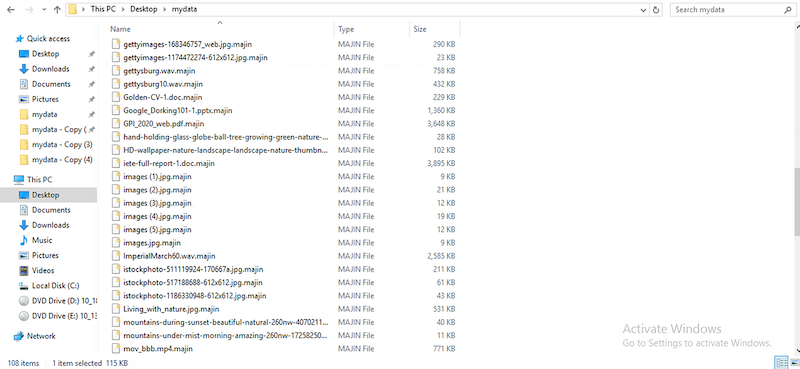
Figure 9: Victim files following detonation, each appended with the “.majin” extension.
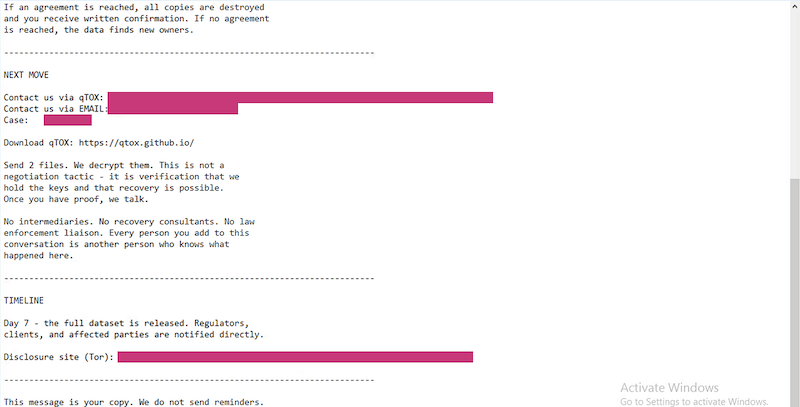
Figure 10: The “README” ransom note listing the verification offer, seven-day disclosure timeline and Tor disclosure site, with contact details redacted.
Protection & Detection Outcomes
Both DataProtect and NetBackup performed successful VMware backup and recovery following the attack. DataProtect VMware backup operations remained unaffected throughout. NetBackup's Image Entropy anomaly detection actively identified unusual deviation in VMware backup job attributes demonstrating its threat detection capabilities working as designed. VMware based backup and recovery was successful for both products.
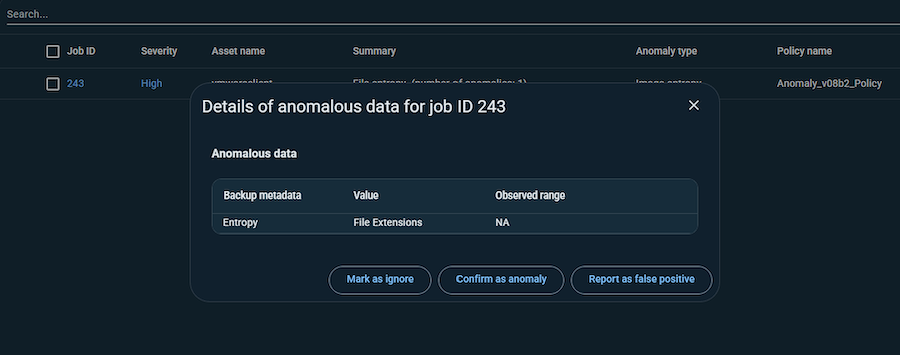
Figure 11: The Gentlemen Entropy Anomaly Result.
Threat Hunting Results
Following the ransomware attack, Rapid Threat Hunt was leveraged to proactively search for malicious activity using known SHA-256 hash and IOC associated with the Majinahanashi ransomware. The hunt successfully identified impacted clusters, objects, and file artifacts within the environment, providing clear visibility into the scope of compromise.
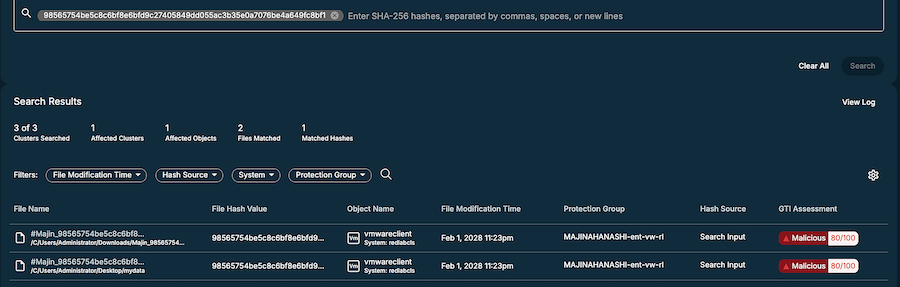
Figure 12: Majinahanashi Rapid Threat Hunt Result.
Black Basta Ransomware
|
Technique Name |
MITRE ATT&CK ID |
Tactic(s) |
|---|---|---|
|
Data Encrypted for Impact |
T1486 |
Impact |
|
Masquerading |
T1036 |
Defense Evasion |
|
Modify Registry |
T1112 |
Defense Evasion |
|
Indirect Command Execution |
T1202 |
Defense Evasion |
|
Virtualization/Sandbox Evasion |
T1497 |
Defense Evasion, Discovery |
|
Abuse Elevation Control Mechanism |
T1548 |
Defense Evasion, Privilege Escalation |
|
Hide Artifacts |
T1564 |
Defense Evasion |
|
Hidden Window |
T1564.003 |
Defense Evasion |
|
Scheduled Task/Job |
T1053 |
Persistence, Privilege Escalation, Execution |
|
Create or Modify System Process |
T1543 |
Persistence, Privilege Escalation |
|
Windows Service |
T1543.003 |
Persistence, Privilege Escalation |
|
Boot or Logon Autostart Execution |
T1547 |
Persistence, Privilege Escalation |
|
Registry Run Keys / Startup Folder |
T1547.001 |
Persistence, Privilege Escalation |
|
Command and Scripting Interpreter |
T1059 |
Execution |
|
Application Layer Protocol |
T1071 |
Command and Control |
|
Data Staged |
T1074 |
Collection |
|
System Owner/User Discovery |
T1033 |
Discovery |
|
System Information Discovery |
T1082 |
Discovery |
Note: Above table contains a curated subset of techniques prioritized for monitoring and response.
Malware impact post execution
Black Basta is a 32-bit Windows PE console payload (approximately 560 KB).
The sample performs several anti-analysis and profiling checks before encrypting. It checks for mouse movement and available memory, queries the keyboard layout, locale and language registry key, reads the volume serial number and physical hardware ID, queries the FIPS cryptography policy and checks its token for administrator or UAC elevation status. It enumerates mount points and registry mount points to identify local, removable and network drives, reads the memory of another process, creates a hidden window, runs commands with the /C switch so the shell terminates on completion and installs a SetUnhandledExceptionFilter anti-debug hook. A date-expiration check was also observed.
Persistence is established through several mechanisms in parallel: autorun at Windows startup, a scheduled task and a service that was created but not started. Boot configuration is modified through bcdedit, volume shadow copies are deleted or modified, and the sample attempted to restart the guest machine, behavior associated with anti-sandbox restarts and recovery-resistant reboots.
Impact is branded and visible. Registry keys are modified for file-extension hijacking so that encrypted files receive a custom “.basta” type and icon, the Recycle Bin is manipulated, and the desktop wallpaper is replaced with a notice that the network is encrypted by the Black Basta group and that instructions are in “readme.txt”. The note claims data was stolen and encrypted, threatens publication on a Tor leak site, offers free decryption of one file and supplies a victim-specific company identifier. The sample also issued HTTP requests with features characteristic of malware traffic, including a request to a commonly exploitable directory path.
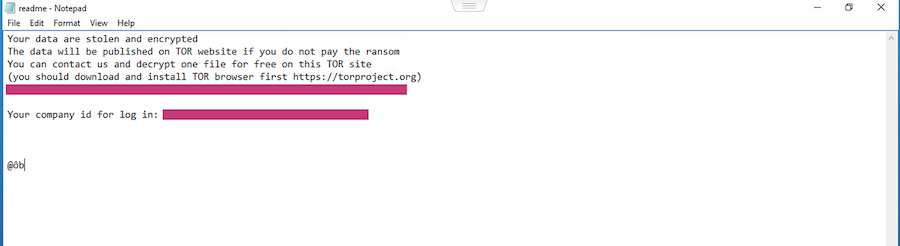
Figure 13: The “readme” ransom note claiming data theft and encryption, with the Tor portal address and company identifier redacted.
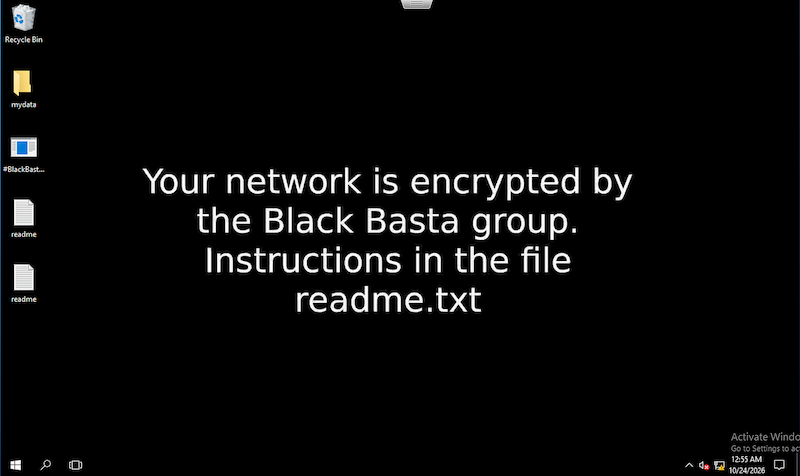
Figure 14: Desktop wallpaper replaced after encryption with a notice that the network is encrypted by the Black Basta group.
Protection & Detection Outcomes
Both DataProtect and NetBackup performed successful VMware backup and recovery following the attack. DataProtect VMware backup operations remained unaffected throughout. NetBackup's Image Entropy anomaly detection actively identified unusual deviation in VMware backup job attributes demonstrating its threat detection capabilities working as designed. VMware based backup and recovery was successful for both products.
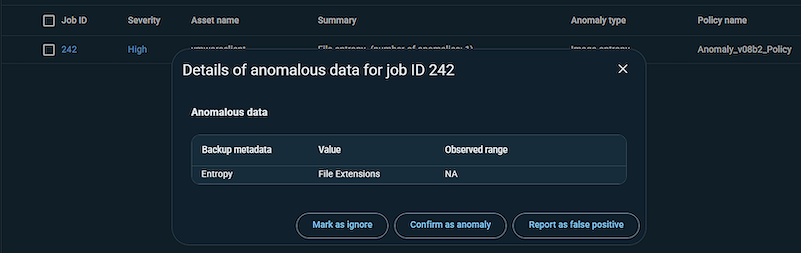
Figure 15: Black Basta NetBackup Entropy Anomaly Result.
Threat Hunting Results
Following the ransomware attack, Rapid Threat Hunt was leveraged to proactively search for malicious activity using known SHA-256 hash and IOC associated with the Black Basta ransomware. The hunt successfully identified impacted clusters, objects, and file artifacts within the environment, providing clear visibility into the scope of compromise.
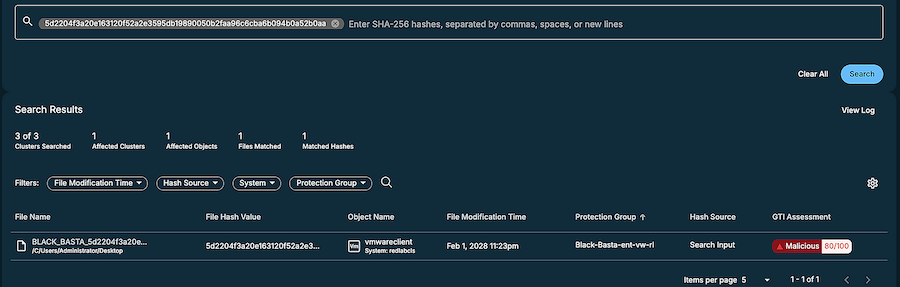
Figure 16: Black Basta Rapid Threat Hunt Result.
Summary
- Both DataProtect and NetBackup achieved successful VMware backup and recovery across all four ransomware strains tested this month – Akira, Qilin, Majinahanashi and Black Basta, demonstrating the resilience of Cohesity's solutions under real-world attack conditions.
- DataProtect VMware backup operations remained unaffected throughout all tests, validating the platform's ability to maintain data protection under adverse conditions.
- NetBackup's Image Entropy anomaly detection actively identified unusual deviations in VMware backup job attributes - confirming its active threat detection capabilities working as designed. VMware based backup and recovery was successful.
- Rapid Threat Hunt enabled proactive threat investigation by correlating known malicious SHA‑256 hashes and IOCs against protected environments, successfully identifying impacted clusters, objects and file artifacts.
For more information on REDLab, please visit https://www.cohesity.com/redlab

Start your 30-day free trial or view one of our demos.