





Loading

The Cohesity Data Cloud: Secure, AI-ready data platform

Protect, secure, and gain insights into your enterprise data, no matter where it lives.

Overview

Where cyber resilience meets the AI-ready enterprise

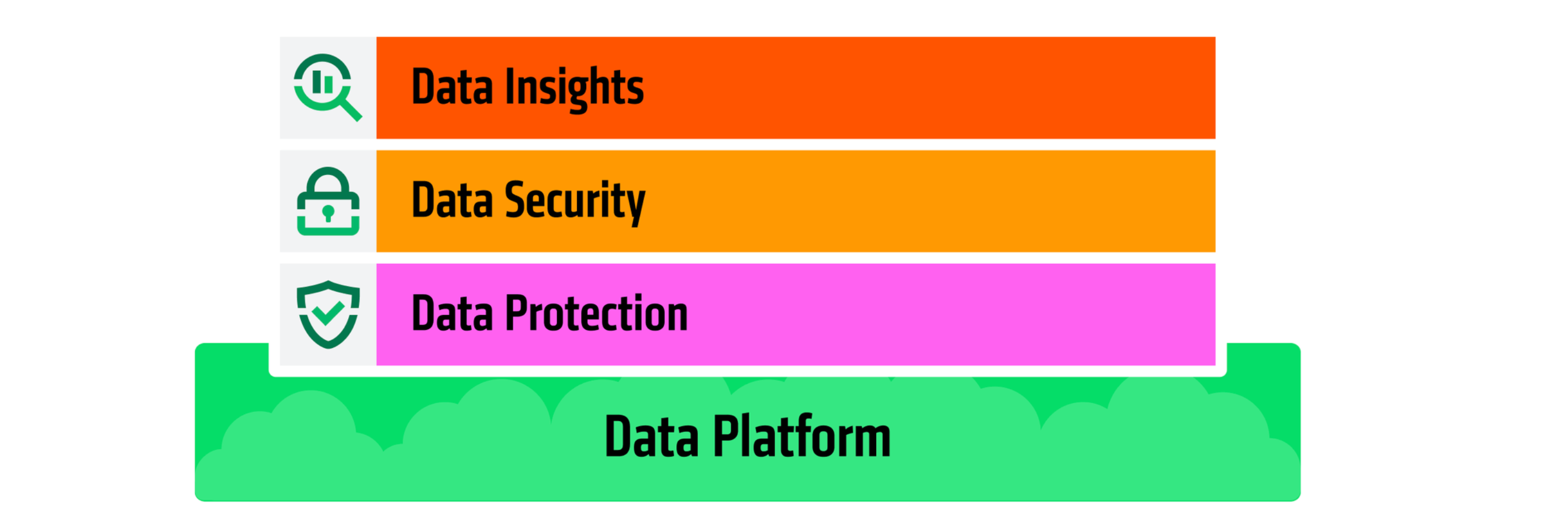
Data platform diagram

One unified platform for data protection, security, and AI—built to strengthen cyber resilience and unlock the value of your data. 

Protection is the foundation 

Protect 1,000+ hybrid cloud and SaaS workloads. 

Security integrated at the data layer 

Strengthen threat detection, automate cyber recovery, and reduce compliance risk. 

Secure AI at enterprise scale 

Improve AI outcomes with secure, trustworthy, AI-ready enterprise data. 

Optimize data management costs 

Reduce TCO as much as 70% and yearly maintenance costs by 50%

Outcomes

13,000+ customers rely on us for their cyber resilience  

Security

Built-in zero-trust principles and AI-powered threat detection, and immutability. 

Scale

Improve your AI outcomes with protected enterprise data

Speed

18x faster backups, 2x faster restores, recover 1000 VMs instantly


Savings

50% lower TCO to secure and manage your data--for organizations of all sizes, across all industries. 

Scale

Some of the largest data protection estates run on Cohesity


Simplicity

One platform, one interface for managing all data, any workload, anywhere

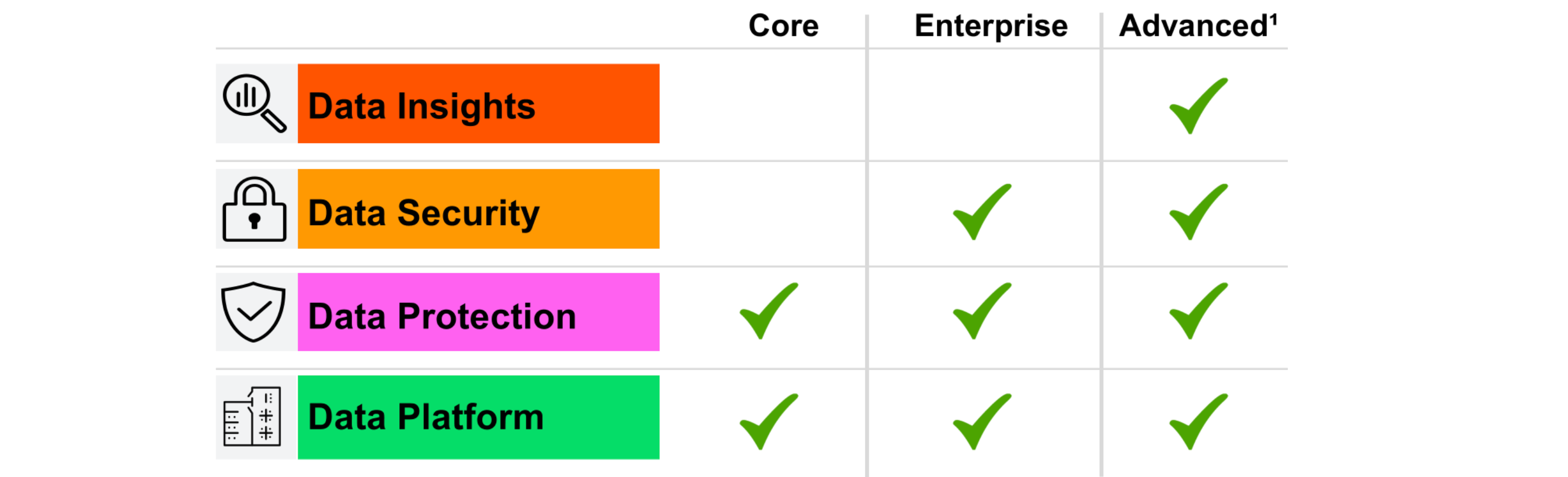
One platform. Three available editions.

Coming soon 

Product portfolio

Cohesity Data Cloud

DataProtect

Simplify data protection, ensure recovery, and defend against ransomware with a modern, hyperscale solution.

Threat protection

Protect and recover against ransomware. Find malware before it spreads using AI-powered threat detection.

NetBackup

Enterprise data protection and security solution.


NetBackup Appliances

Turnkey, cyber-hardened data protection.


Cohesity Gaia

Make smarter business decisions faster with AI-powered conversational search.
 

FortKnox

Boost ransomware resilience with award winning, highly secure cyber vaulting.


SmartFiles

Take advantage of software-defined file and object services with next-level intelligence, scalability, and efficiency.

Deployment options

Run the Cohesity Data Cloud to suit your requirements. Available as Cohesity-managed, self-managed, or partner-managed offerings.

Backup as a Service

Get started faster with SaaS. Sign up for a free trial. 

Service provider managed

Let your Cohesity-Powered service provider manage it all on your behalf.

Self-managed

Run the Cohesity Data Cloud in public clouds and on-premises on certified platforms.

Cohesity Community

Join the Cohesity Community

Explore technical discussions in the Cohesity Community. If you’re interested in connecting with peers, exchanging ideas, or enhancing your product knowledge, this is the place to collaborate and grow with others using Cohesity solutions.

Commonly asked questions about cloud data management and security 

Cloud data management refers to the process of storing, organizing, protecting, and retrieving data in a cloud environment. The cloud provides a centralized platform for managing data, where businesses can store and access their data from anywhere with an internet connection.

Cloud data management involves various tasks, including data backup, disaster recovery, data migration, data synchronization, and data security. With cloud data management, businesses can scale their data storage needs up or down based on their changing requirements without worrying about infrastructure costs and maintenance.

Cloud data management solutions can be delivered as a software-as-a-service (SaaS) model or as a managed service offered by cloud service providers. These solutions use various technologies such as artificial intelligence, machine learning, and automation to provide efficient data management and simplify data-related tasks.

Cloud data solutions also provide data analytics and insights that help businesses make informed decisions. Cloud data management can be a cost-effective and efficient way for businesses to manage their data and ensure that their data is secure, available, and accessible when needed. It also supports digital transformation initiatives by enabling businesses to modernize their data infrastructure.


Cloud data management is becoming increasingly important for businesses of all sizes and industries for several reasons.

First, it provides a cost-effective solution for data storage and management. Traditional data storage solutions require significant investments in hardware, software, and IT infrastructure, while cloud data management allows businesses to pay only for the storage and services they need, without the upfront capital expenditures.

Second, cloud data management enables businesses to scale their storage and processing needs seamlessly. As businesses grow and generate more data, cloud providers offer flexible and scalable storage solutions that can accommodate their data management requirements. A data storage platform that uses cloud technology allows organizations to expand their storage capacity quickly and efficiently without needing to invest in additional physical infrastructure.

Third, cloud data platforms improve data availability and accessibility. Businesses can access their data from anywhere, at any time, with an internet connection. Plus, cloud providers offer advanced data backup and disaster recovery services to ensure data availability even when unexpected events occur.

Fourth, data management in the cloud can improve data security. Cloud providers typically implement advanced security measures, such as encryption, access controls, and regular security updates, to protect the data stored on their platforms. These security features help businesses safeguard sensitive data and comply with data protection regulations. The level of protection a cloud data platform provides is crucial for maintaining customer trust and preventing data breaches while also making compliance with data regulations more manageable.

Finally, cloud data management provides businesses with insights into their data. Cloud solutions offer advanced data analytics and machine learning tools that enable businesses to gain insights into their data and make informed decisions—helping businesses improve their operations, identify new opportunities, and enhance customer experiences. This is particularly important for managing multiple data sources and integrating data from various systems to achieve a unified view.

While cloud data management platforms offer many benefits, it also presents challenges for business and IT leaders.

One of the primary challenges is data security. The security of the data stored in the cloud is a shared responsibility between the cloud provider and the customer. Organizations need to ensure that they have proper security measures in place to protect their data, including encryption, access controls, and regular security updates.

Another challenge is data integration. Businesses often have data stored in multiple locations and formats, making it difficult to integrate and manage in the cloud. Ensuring seamless data integration requires careful planning, proper tools, and expertise.

Data migration is an obstacle, too. Moving data to the cloud requires careful planning to avoid data loss or corruption. Businesses need to ensure that their data is properly backed up and can be easily restored in case of migration issues.

Performance and availability are also critical concerns for many businesses. Cloud providers need to ensure that their services are available and performant at all times to meet business demands. Any downtime or performance issues can have a negative impact on business operations.

Lastly, data governance and compliance are essential considerations in cloud data management. Businesses need to ensure that their data management practices comply with regulations and industry standards to avoid legal and reputational risks.

Cloud data management offers businesses several benefits, so it’s an increasingly popular choice for managing and storing data. Enterprises often seek to realize these five benefits:

  1. Cost savings: Cloud data management eliminates the need for businesses to invest in proprietary hardware and IT infrastructure, which can be costly to purchase, maintain, and upgrade. With cloud data management, businesses only pay for the storage and services they need, and can easily scale up or down as their requirements evolve.
  2.  Scalability: Cloud data management provides businesses with a scalable solution for storing and managing data. Cloud providers often offer flexible storage options that can be quickly and easily expanded to accommodate business (and data) growth.
  3.  Accessibility: Cloud data management platforms allow businesses to access their data from anywhere with an internet connection, making it easy to collaborate with remote teams and access critical data when needed.
  4. Security: Cloud providers offer advanced security capabilities, including encryption, access controls, and regular security enhancements, to protect the data stored on their platforms. This way, businesses can more easily store and manage their data securely and in compliance with common industry regulations. 
  5. Data insights: Cloud data management tools often include advanced analytics and machine learning capabilities that help businesses gain valuable insights into their data, identify trends, and make informed decisions.

Cloud data management platforms have become increasingly popular in recent years, and there are many different use cases where businesses can benefit from it. Here are some of the most common:

  1. Data backup and disaster recovery: Cloud data management products can provide businesses with reliable and secure backup and recovery options, reducing the risk of data loss due to hardware failures, human error, or natural disasters.
  2. Data archiving: Businesses can use cloud data management solutions to archive older or less frequently accessed data, freeing up space on local storage and reducing costs.
  3. Data analytics: Cloud data management tools often offer advanced analytics and machine learning capabilities to analyze large amounts of data, identify trends, and make informed decisions.
  4. Collaboration and file sharing: Employees can use cloud data management to share files and collaborate with remote teams in real time, improving productivity and efficiency. This collaboration makes it easier to handle customer data platforms effectively and ensure improved data quality through consistent data practices.

Resources

Webinar
Webinar
Cyber incident response readiness: from preparation to action
White Paper
White Paper
Modern data security and management topologies: A guide for IT leaders
White Paper
White Paper
Inside the Cohesity REDLab: Rigorously testing the real-world resilience of Cohesity products
Webinar
Webinar
Strengthen your cyber resilience with NetBackup 11
White Paper
White Paper
Grow your cyber resilience with Cohesity Data Cloud.
Loading